Dispatch
First 7 Star Hotel in the World: Burj Al Arab
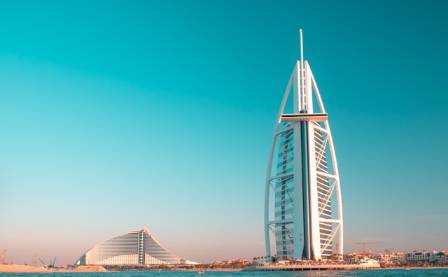
Standing proudly off Dubai’s Jumeirah coastline, the Burj Al Arab has become a global symbol of luxury, extravagance, and architectural brilliance. With its sail-shaped silhouette, lavish interiors, and reputation as the world’s first and only “seven-star hotel,” it remains one of the most iconic landmarks of the United Arab Emirates.
Mary
Rider
Desk note
Full dispatch and transfer tips sit below.
Line
Blue Line Walk
Standing proudly off Dubai’s Jumeirah coastline, the Burj Al Arab has become a global symbol of luxury, extravagance, and architectural brilliance. With its sail-shaped silhouette, lavish interiors, and reputation as the world’s first and only “seven-star hotel,” it remains one of the most iconic landmarks of the United Arab Emirates.
A Vision Turned Reality
Commissioned by Sheikh Mohammed bin Rashid Al Maktoum, the Burj Al Arab was designed to position Dubai as a premier destination for high-end tourism. British architect Tom Wright created a structure that embodied the emirate’s maritime heritage while signaling a futuristic spirit. Construction began in 1994 and required the creation of an artificial island 270 meters offshore. The hotel opened in December 1999, just before the new millennium, instantly gaining worldwide fame.
Engineering Feat on the Sea
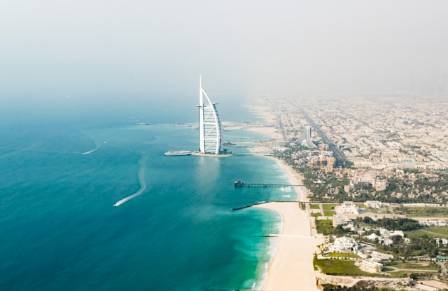
The Burj Al Arab rests on 250 reinforced concrete piles driven 40 meters into the seabed. The island rises 7.5 meters above the Persian Gulf and is connected to the mainland by a 200-meter bridge. At 321 meters tall with 56 floors (including three underground levels), it held the record as the tallest hotel in the world until 2007. Its orientation was carefully planned to prevent casting shadows on nearby beaches, and its sleek curves give the illusion of a sail floating on water.
Interior Splendor
Inside, no expense was spared. Designer Khuan Chew incorporated marble from Italy and Brazil, 24,000 square meters of gold leaf, and intricate mosaics. The atrium—soaring 180 meters high—is among the tallest in the world, decorated with fountains, aquariums, and golden columns. Overall, construction demanded over 70,000 cubic meters of concrete, 9,000 tons of steel, and the efforts of thousands of workers.
Suites Beyond Imagination
Unlike most hotels, the Burj Al Arab offers only duplex suites, each with panoramic views of the Arabian Gulf. The smallest measures 170 square meters, while the Royal Suite stretches across 780 square meters. Every suite features opulent furnishings, Egyptian cotton bedding, marble baths, and technology such as gold-plated iPads for service requests. Guests enjoy a private butler, luxury toiletries, and a host of personalized services.
The Price of Prestige
A stay here is as exclusive as it is expensive. Standard suites typically range between $1,100 and $2,800 per night, while diplomatic or presidential accommodations can soar above $12,000. These rates often include gourmet breakfasts, chauffeur services, and Hermès amenities. Access to the hotel is restricted to guests or those with reservations at its fine-dining restaurants.
Location and Access
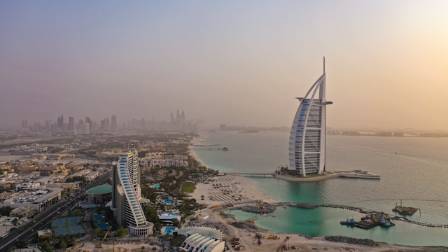
The Burj Al Arab sits at Jumeirah Beach, next to the Wild Wadi Water Park and the Madinat Jumeirah complex. It is about 25 kilometers from Dubai International Airport, reachable in 20–30 minutes by taxi. Visitors cross a guarded bridge to reach the property, and for the most extravagant arrivals, the helipad atop the tower is occasionally used.
Conclusion
The Burj Al Arab is more than a hotel—it is a statement of Dubai’s ambition, extravagance, and global status. From its record-breaking architecture to its opulent interiors and unparalleled hospitality, it embodies luxury on an unmatched scale. Whether you admire it from the shore, capture its silhouette from the sea, or indulge in a stay, the Burj Al Arab guarantees an unforgettable encounter with modern magnificence.
Nearby stops
 STOP
· en
World Most Beautiful Beaches
Aveline Shaw
 STOP
· en
Explore the Cultural Significance and Beauty of Cherry Blossoms
Taylor Reed
 STOP
· en
Embracing Simplicity in Interior Design: A Thoughtful Approach
Joshua
 STOP
· en
Stoats: New Zealand’s Stealthy Threat to Native Birds
Caelan Mercer
 STOP
· en
Black Forest Cake Made Easy
Avery Quinn
 STOP
· en
The Black Swan
Mira Blake