Dispatch
How to Create a Minimalist Kitchen
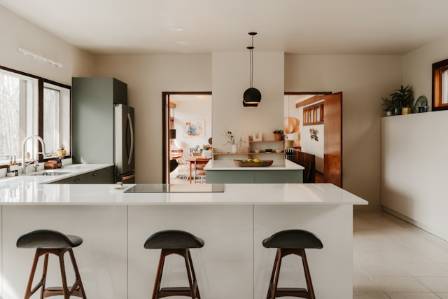
Minimalism looks effortlessly chic on Instagram, with its pristine shelves and elegant appliances—but putting it into practice can feel intimidating. This is especially true in kitchens, where daily activity, cooking tools, and gadgets seem to multiply constantly.
Samuel Porter
Rider
Desk note
Full dispatch and transfer tips sit below.
Line
Blue Line Walk
Minimalism looks effortlessly chic on Instagram, with its pristine shelves and elegant appliances—but putting it into practice can feel intimidating. This is especially true in kitchens, where daily activity, cooking tools, and gadgets seem to multiply constantly.
Yet, the challenge is exactly why creating a minimalist kitchen is so rewarding. A streamlined space isn’t just visually pleasing—it’s easier to navigate, simpler to clean, and can even make cooking more enjoyable. Here’s a guide to building a minimalist kitchen, based on advice from seasoned minimalists and professional organizers.
Why Embrace a Minimalist Kitchen?
You might wonder why it’s worth the effort. Overhauling a kitchen is no small task, but the payoff is significant.
"A minimalist kitchen is tailored to your lifestyle," explains minimalism expert Francine Jay. "Rather than a jumble of gadgets you rarely touch, it includes only what you actually need to prepare the meals you enjoy." She compares it to a capsule wardrobe: each item is versatile, functional, and purposeful.
Joshua Becker, another well-known minimalist blogger, adds, "Having fewer kitchen items makes the space easier to use and maintain. Minimalism has a way of improving your mood and the overall efficiency of the room."
Eliminate Redundancies
A simple first step is to reduce duplicates. "Most households have more than they need—how many peelers or corkscrews does one person require?" asks professional organizer Shira Gill. "These are often easy decisions without emotional attachment."
Other common duplicates include mugs, glasses, and food storage containers. "Kitchens often become cluttered with mismatched or damaged containers, many missing lids," Gill notes. Removing excess duplicates immediately reduces clutter.
Keep Only What’s Essential
Minimalism is about keeping only what’s necessary, and kitchens are no exception. Gill observes, "It’s eye-opening to realize how few tools you really need to cook well. A single chef’s knife can do the job."
For those hesitant to part with items, Jay suggests a trial method: place all kitchen items in a cardboard box and remove them from the kitchen temporarily. "Cook as you normally would, taking only what you need from the box," she advises. "If an item hasn’t been retrieved after a week or month, question whether it truly belongs in your kitchen."
Becker adds, "Our grandparents managed to prepare great meals with far fewer gadgets and tools than we accumulate today."
Keep Counters Clear
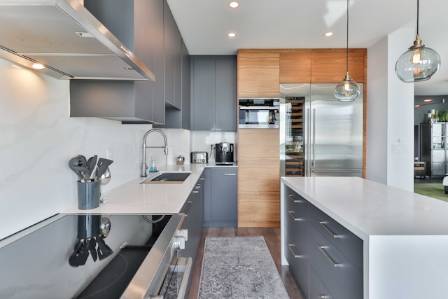
Clear surfaces are crucial for functionality. Jay recommends, "Remember: countertops are for cooking, not storage. Only keep items you use daily on display."
Keeping counters tidy improves workflow and reduces visual clutter, creating a calmer, more serene environment. For extra storage without crowding surfaces, consider wall-mounted racks or hanging baskets.
Reduce Gadgets
Kitchen gadgets are tempting but often unnecessary. From air fryers to specialty coffee makers, these tools can occupy valuable space while rarely being used. "Most of us don’t make complex dishes regularly," Jay points out. "Stick to the essentials and let go of items unlikely to see daily use."
Keep devices integral to your routine, such as a coffee maker or toaster, but remove those used only occasionally. Becker emphasizes, "Minimalism often reveals that fewer tools can still yield delicious meals."
Assign a Home for Everything
Once you’ve pared down, organize what remains. Jay suggests using drawer organizers for utensils and small tools, making items easier to locate and preventing clutter from accumulating.
Also, remove items that don’t belong in the kitchen at all. "Mail, paperwork, and children’s toys often end up in the kitchen. A quick sweep can make the space feel instantly more manageable," Gill notes.
Maintain a Clean Space
Minimalism is easier to sustain when cleaning habits are consistent. Gill recommends small daily routines: "Even in a busy household, washing dishes after meals and wiping counters daily prevents messes from piling up."
By keeping up with simple maintenance, your kitchen will stay functional and aesthetically minimal without excessive effort.
Be Patient with the Process
Achieving minimalism is a gradual journey. "Kitchens are among the hardest rooms to declutter," Gill warns. "Break the task into small zones, tackling one drawer or item type at a time to avoid overwhelm."
The result is worth the effort. Becker reflects, "I never enjoyed cooking until I adopted a minimalist approach. Clearing space for preparation and cleaning transformed my kitchen experience. Now I genuinely love it."
Nearby stops
 STOP
· en
How to Draw a Capybara
Luna Hart
 STOP
· en
Best Small Tongs and Containers for Sugar Cubes
Mason Cooper
 STOP
· en
The Most Beautiful Snow-covered Mountains in the World
Damon Reese
 STOP
· en
Rugs for Small Spaces
Sage Bennett
 STOP
· en
The Future of the Robotic Kitchen
Maya Collins
 STOP
· en
What’s so Special about the Underwater World?
Tessa Quinn