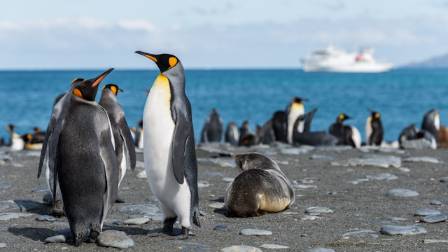
Imagine a vast expanse of ice and snow, windswept shores, and rugged volcanic islands. Now picture penguins: some waddling clumsily on land, others gliding gracefully underwater, thriving in some of the harshest yet most breathtaking habitats on Earth. From Galapagos penguins navigating tropical waters to towering emperor penguins braving Antarctica’s extreme cold, these charismatic birds captivate us with their unique adaptations and behaviors. Dive in to discover fascinating facts about penguins—where they live, how they survive, and the challenges they face today.
1. Penguins are flightless birds with specialized adaptations for swimming and camouflage
Although penguins belong to the bird family, they are unique in their inability to fly. Equipped with flippers instead of wings, they excel at swimming, waddling, and sliding. In water, they can reach speeds of up to 15 mph and even launch themselves airborne briefly to evade predators or climb icy slopes quickly. Their iconic black-and-white coloration, known as countershading, serves as underwater camouflage: from below, their white bellies blend into the bright ocean surface, while their dark backs hide them from predators above.
2. Galapagos penguins are the only equatorial penguins and the rarest, facing severe endangered threats
The Galapagos penguin is the sole penguin species found north of the equator, making its home on the Galapagos Islands. It is also the rarest penguin, with fewer than 2,000 individuals remaining today. Currently listed as endangered, these penguins confront threats including pollution, bycatch, climate change, and introduced predators like cats and dogs. Severe El Niño events have previously caused mortality rates of up to 77%, drastically reducing prey availability and breeding success. The growing impacts of climate change further imperil this dwindling population. You can experience Galapagos penguins in their natural habitat on Nat Hab’s Galapagos Discovery adventure.
3. Commercial fishing endangers penguins by competing for food and causing accidental bycatch
Commercial fishing in the Southern Ocean forces penguins to compete for critical food sources, especially fish. As human fishing practices intensify, penguins’ access to nourishment is compromised, increasing their risk of starvation. Accidental capture, or bycatch, also poses a significant threat—penguins often become trapped in fishing nets and drown, worsening population declines.
4. Penguins are highly monogamous among birds but may have multiple partners in one season; breeding seasons vary widely
Birds exhibit higher monogamy rates than mammals, and penguins are among the most monogamous avian species. During a single mating season, male penguins typically breed with only one female. However, it is not uncommon for females to have 1 to 3 partners and males to have 1 or 2 within the same season. Penguin breeding seasons, usually spanning spring to summer, vary greatly across species, lasting anywhere from 50 days to as long as 14–16 months.
5. Chinstrap penguins are named for their distinctive black head marking resembling a helmet chinstrap
Chinstrap penguins get their name from the narrow black band beneath their heads, which connects to a large black patch on top. This marking closely resembles the chinstraps on helmets often worn by football or hockey players.
6. Climate change threatens Antarctic penguins (emperor, Adélie) by destroying critical sea ice habitats
Climate change impacts not only Galapagos penguins but also Antarctic species, notably emperor and Adélie penguins. These penguins rely on sea ice for accessing food and breeding, so rapidly disappearing sea ice severely endangers their survival. Current projections indicate that if global temperatures continue to rise, over 90% of emperor penguin colonies could face quasi-extinction by the end of the century. A 2023 study highlighted the vital role of sea ice during Adélie penguins’ molting period: a 10% decrease in sea ice concentration in molting areas led to penguins spending an additional 1.6 days foraging, which could harm their survival and reproduction. Over the past three decades, Antarctic sea ice has declined by more than 60% in certain regions, significantly reducing krill populations—a primary food source for Adélie penguins. Diminishing krill availability and altered hatching periods pose severe threats to these populations.
7. Penguins live 15–20 years on average, with high mortality risks for chicks in their first year
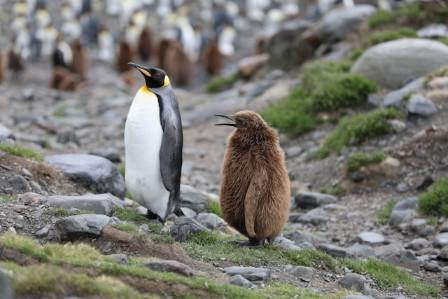
Penguins generally live 15–20 years, though lifespan varies by species. The first year of life is particularly perilous, with high mortality risks due to food scarcity and predators. Approximately 50% of king penguin chicks die of starvation during winter, while up to 90% of emperor penguin chicks may not survive their first year.
8. Southern rockhopper penguins are small, hopping birds whose populations have declined and face climate change risks
The southern rockhopper penguin weighs under 10 pounds and inhabits islands such as Heard, McDonald, and Macquarie, located between Madagascar, Australia, and Antarctica. Named for their distinctive hopping movements over rocky terrain, their populations have decreased by nearly 25% over the past 30 years. Climate change presents further risks, classifying the species as vulnerable—facing a high extinction risk in the wild but not yet endangered.
9. Emperor penguins are the largest penguins, exceptional divers, and have dedicated male caregivers
Emperor penguins, standing nearly four feet tall, are the giants of the penguin world. They primarily reside on floating Antarctic ice packs and islands. Their scientific name, Aptenodytes forsteri, meaning “featherless diver,” was coined by an 18th-century naturalist and colleague of Captain Cook. Renowned for their diving abilities, emperor penguins can dive deeper and stay submerged longer than any other penguin species. Male emperor penguins are dedicated caregivers, safeguarding and incubating eggs for nearly five months during harsh Antarctic winters to protect them and hatchlings from extreme cold.
10. Penguins can’t coexist with terrestrial carnivores; their diet varies by species and location to reduce competition
Penguins could likely not survive in habitats with terrestrial carnivores such as polar bears, Arctic foxes, or Arctic wolves. Their diet mainly consists of krill, squid, and fish, varying by species and geographic location. Antarctic and subantarctic penguin species, especially smaller ones, primarily feed on krill and squid, while those inhabiting northern islands mainly eat fish. To reduce food competition, larger penguin species target larger krill and squid, allowing smaller species to subsist on smaller prey. For example, in Antarctica, Adélie penguins primarily consume small krill, while chinstrap penguins hunt larger krill.
 STOP
 STOP
 STOP
 STOP
 STOP
 STOP