Dispatch
Iron Chains Hold an Ancient Cliffside Pavilion
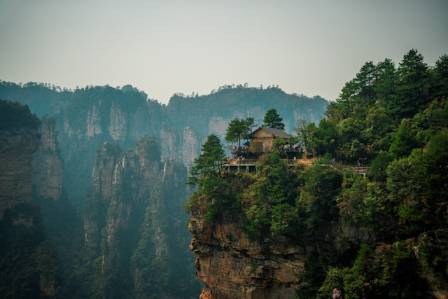
Before visiting She County, I had imagined Wa Huang Palace as nothing more than a typical ancient temple. That impression changed completely when I saw it in person. The most astonishing sight is the Wa Huang Pavilion, which appears to project directly from the cliff and is supported by nine iron chains.
Mira Holden
Rider
Desk note
Full dispatch and transfer tips sit below.
Line
Blue Line Walk
Before visiting She County, I had imagined Wa Huang Palace as nothing more than a typical ancient temple. That impression changed completely when I saw it in person. The most astonishing sight is the Wa Huang Pavilion, which appears to project directly from the cliff and is supported by nine iron chains.
When the wind moves through the mountain, the structure can sway slightly, while the iron chains produce a distinct clanging sound. Because of this unusual design and movement, local people affectionately refer to it as the “Living Hanging Temple,” making it a particularly rare sight in China.
How Does the Hanging Pavilion Stay Suspended?
The Wa Huang Pavilion stands halfway up the cliff of Zhonghuang Mountain. Its rear section is attached to the mountainside, while much of the building extends outward over the steep rock face.
According to the traditional construction method, craftsmen created eight openings in the cliff and used nine large iron chains to help hold the pavilion securely in place.
When numerous visitors enter the structure, its center of gravity causes the building to tilt slightly forward. This movement puts additional tension on the chains and produces a deep, resonant sound.
Standing on the third floor and looking down from the edge is an unforgettable experience. The sheer drop beneath the pavilion creates a dramatic sense of height, and looking directly into the seemingly endless gorge can be enough to make even confident visitors feel a little unsteady.
A Northern Qi Stone Cave at the Entrance
One of the most important historical features of Wa Huang Pavilion can be found on its first floor. The stone cave dates back to the Northern Qi period and is more than 1,400 years old.
Six Buddhist scriptures were carved across three walls of the cave, with the inscriptions containing more than 130,000 characters in total. The lettering remains remarkably clear despite the enormous amount of time that has passed.
The collection is regarded as an extraordinary example of ancient Buddhist scripture inscriptions and is often described as the “World’s Number One Wall Scripture Collection.”
Standing inside the cave and running your fingers near the ancient carvings creates a tangible connection with the craftsmen who painstakingly cut every character into the stone centuries ago. The experience can feel far more immediate than simply reading about the history in a book.
An Ancient Form of Natural Air Conditioning
The stone cave offers another unexpected experience during the summer. Even when temperatures outside climb to around 38°C, entering the cave can bring an immediate feeling of coolness.
The tall pavilion structure, natural cross-ventilation, and naturally cool environment inside the stone cave work together to create a remarkably comfortable atmosphere.
Sitting near the entrance for a short rest while cool mountain air moves through the space can be incredibly refreshing. In the heat of summer, this naturally cooled environment can feel surprisingly comfortable without any modern air-conditioning equipment.
How to Explore Wa Huang Palace
A convenient way to begin the visit is to take the electric shuttle to Butian Square. Here, visitors can see the impressive statue of Nuwa, which stands 9.9 meters tall.
From there, there are two main options for continuing uphill. Visitors who enjoy hiking can follow the “Eighteen Bends” trail, which takes roughly 45 minutes and passes four pavilions along the route.
Those who prefer a quicker and easier ascent can use the cable car, with a one-way fare of 40 yuan.
Exploring the Three Levels of Wa Huang Pavilion
The three floors of Wa Huang Pavilion each offer something different and are all worth exploring.
The first floor contains the ancient Northern Qi stone cave and its extensive scripture inscriptions. This is the place to focus on if you are particularly interested in history, religion, and ancient stone carving.
The second floor, known as Qingxu Pavilion, features historic murals that add another layer of artistic and cultural interest to the structure.
The third floor is Yanguang Pavilion and provides the most impressive panoramic views. From this elevated position, visitors can look across the landscape and see the shimmering waters of Butian Lake surrounded by the layered peaks of the Taihang Mountains.
With the mountain breeze passing through the pavilion and the vast landscape stretching out below, the third floor is also an ideal place to escape the summer heat and appreciate the extraordinary setting of this ancient cliffside structure.
Nearby stops
 STOP
· en
Flaky French Butter Croissants Recipe
Theo Whitman
 STOP
· en
Cool Facts About The Lotus Flower
Kellan Rhodes
 STOP
· en
The Wonderful Kumquat: A Unique Citrus Gem
Harper
 STOP
· en
Tai'an's Tranquil Forest Oxygen Bar
Jackson Miles
 STOP
· en
The Most Renowned Still Life Artworks of All Time
Edward
 STOP
· en
Your Ultimate Guide to Top Windbreaker Jackets – The Perfect Blend of Style, Comfort & Protection
Karry